How to Fix the Future
Play How to Fix the Future
How to Fix the Future Screenshots















How to Fix the Future review
Master every choice, unlock all endings, and navigate the time-travel narrative in this visual novel adventure
How to Fix the Future stands out as an engaging visual novel that challenges players to navigate complex moral choices and time-travel mechanics. This interactive narrative experience puts you in control of pivotal decisions that shape the story’s outcome across multiple playthroughs. Whether you’re a first-time player looking to understand the core mechanics or a seasoned veteran hunting for hidden endings, this comprehensive guide covers everything you need to master this thought-provoking adventure. Discover character backgrounds, explore branching storylines, and learn how your choices ripple through the narrative.
Understanding the Core Narrative and Setting
Ever booted up a game, made what felt like a tiny, insignificant choice in a conversation, only to have it come back hours later to completely derail your story? 😅 I remember my first playthrough of How to Fix the Future, confidently telling a certain character to “chill out,” thinking I was just being the cool, level-headed protagonist. Big mistake. That single dialogue option quietly locked me out of an entire story branch filled with crucial tech and a deeply touching character arc. It was a brutal, but brilliant, lesson in how this time-travel narrative game truly works.
How to Fix the Future isn’t just a story you read; it’s a reality you weave, snip, and re-stitch with every decision. At its heart, this visual novel is a masterclass in cause and effect, where understanding the why behind the world and its people is just as important as knowing the what to do. Before you can fix time, you need to understand what’s broken. Let’s dive into the foundation.
The Time-Travel Premise and World-Building 🕰️🔮
The genius of How to Fix the Future’s setup is its elegant, yet devastatingly high-stakes, core concept. You don’t play as a god-like chrononaut jumping through history for fun. Instead, you’re a recruit for the Temporal Corrections Agency (TCA), an organization tasked with one job: preventing “Temporal Degradation.” Think of it less as classic time travel and more like… cosmic janitorial work for the timeline. ⚙️
The world you come from is a quiet dystopia—not with robots and neon, but with a slow, suffocating decline. Innovation is stagnant, governed by monolithic corporations, and a general sense of “this is just how things are” hangs over society. The game reveals this not through bombastic cutscenes, but through interactive fiction gameplay staples: offhand comments, news snippets on terminals, and the resigned tones of the characters. The TCA represents a desperate, hidden hope. They’ve identified that small, seemingly isolated events in the past are creating cascading failures in your present. Your mission is to go back and gently “nudge” these events back on course.
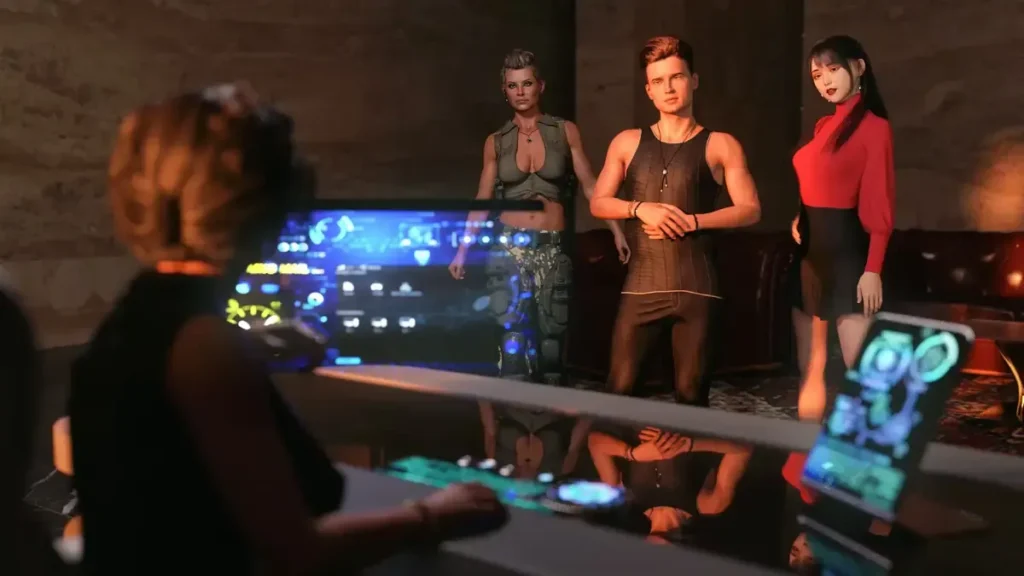
This is where the game’s branching narrative structure is born. Every mission briefing in the TCA’s sleek, sterile HQ presents you with a “point of degradation.” It might be a failed experiment in 1999 or a corporate merger in 2012. Your job is to identify the key person or moment and influence it. The world-building is delivered through two primary channels: tense, character-driven dialogue during missions and the TCA’s own “Database” files you unlock. Reading these files isn’t optional homework; it’s often the key to understanding the wider conspiracy. You’ll piece together the shadowy influence of the corporate giant, Pallas, and its ruthless CEO, Derek, as well as the unsettling interest of government agencies like the NSA. 🏢🔍
The stakes are intensely personal. Fail to correct a point, and you return to an HQ that’s subtly wrong—a colleague you remember is now gone, the technology feels clunkier, or a pervasive sense of dread has taken root. The game makes you feel the weight of the timeline not through world-ending explosions, but through these chilling, intimate erasures.
Key Characters and Their Motivations 🎭❤️
The heart of any great visual novel story branches from its cast, and How to Fix the Future characters are designed not as archetypes, but as catalysts. Your choices matter because they matter. Their personalities, histories, and secrets are the levers you pull to alter the story’s path.
At the center is Chloe (that’s you!). As a new TCA recruit, you’re uniquely blank yet profoundly powerful. Your background is your own, but your role is clear: the connector. Your ability to listen, empathize, or strategically manipulate the people of the past directly shapes the future. The brilliant “Academy” training sequence at the start isn’t just a gameplay tutorial; it’s a narrative one. It teaches you that gathering intel (through conversation and observation) is your primary weapon, and that every relationship is a tool for temporal correction.
Then there’s Maya, your steadfast handler and guide at the TCA. Calm, professional, and deeply burdened by the weight of their work, Maya represents the institutional approach. They believe in protocols, minimal intervention, and the “greater good.” However, push them in dialogue, and you’ll discover cracks—doubts about the TCA’s own history and the true cost of their corrections. Aligning with Maya’s philosophy tends to steer you toward more orderly, but potentially colder, outcomes.
The wild card is Leo, a fellow agent with a… looser interpretation of the rules. Charismatic, impulsive, and driven by a strong sense of personal justice, Leo believes sometimes you need to break a few temporal eggs to make an omelet. They’re your source for riskier, off-the-books strategies and often have contacts in the past that the TCA officially disapproves of. Trusting Leo opens up daring, high-reward story branches that can bypass obstacles entirely or create spectacular new ones.
And of course, in the past, you have figures like Derek, the CEO of Pallas. He’s not a cartoon villain; he’s a visionary with a ruthless, ends-justify-the-means mentality. Your interactions with him are a delicate dance. Do you try to steer his ambition toward a kinder path, sabotage his efforts entirely, or even attempt to recruit him? Understanding his motivation—a genuine, if twisted, belief that his centralized control is the only path to progress—is key to navigating his role in the timeline.
To help you keep track of this web of relationships, here’s a breakdown of the core cast:
| Character | Role | Key Traits & Motivations | Narrative Significance |
|---|---|---|---|
| Chloe (You) | TCA Recruit / Protagonist | Adaptable, empathetic, decisive. Motivated by a desire to fix a broken world. | Your choices define the story’s moral compass and unlock all major branches and endings. |
| Maya | TCA Handler / Mentor | Principled, cautious, burdened. Believes in protocol and systemic stability. | Represents the “by-the-book” path. High trust with Maya leads to endings focused on preservation and order. |
| Leo | Fellow TCA Agent | Charismatic, rebellious, personal. Driven by emotional justice and direct action. | Represents the “rogue” path. High trust with Leo unlocks risky missions and endings about radical change. |
| Derek (Pallas Corp) | Primary Antagonist / Figure in the Past | Brilliant, ruthless, visionary. Seeks control to enact his version of utopian progress. | The central “point of degradation.” How you handle him is the single biggest factor in determining the game’s final act and endings. |
| Kai | Tech Specialist / Past Contact | Idealistic, innovative, wary of authority. Wants technology to empower people, not control them. | Often an alternative to Derek. Supporting Kai can reroute technological development toward open-source, decentralized futures. |
How Your Choices Shape the Story 🌳🔀
This is where the magic of How to Fix the Future visual novel truly comes alive. The game’s structure is a elegant web of character choices and consequences. Think of it less as picking “Good, Neutral, or Evil” and more as constantly defining who Chloe is and how she operates. This identity then determines which doors in the narrative hallway open for you.
The most immediate choices are in dialogue. This isn’t just flavor text. Every major character has a hidden “Trust” or “Alignment” meter. Agreeing with Maya’s cautious plans boosts your standing with her, which may later cause her to share classified TCA intel that reveals a new approach to a mission. Backing Leo’s impulsive idea might earn their loyalty, leading them to provide you with an unauthorized gadget at a critical moment. I learned this the hard way after consistently dismissing Leo’s methods; when I was in a pinch later, they simply weren’t there to help. 😬
Pro Tip: There’s no “right” answer in conversations, only consistent character. If you want to see a specific branch, pick options that align with the character whose path you’re following. Mixing and matching can lead to unique, often messy, hybrid outcomes!
Beyond dialogue, key moments present action choices that dramatically split the plot. Early on, you might be given a mission to secure a prototype. Do you:
* Follow TCA protocol and negotiate (Maya’s path)?
* Hack the system and steal it (Leo’s path)?
* Try to convince the inventor to hide it (a potential third path)?
This single decision can determine which locations you visit for the next two hours of gameplay, which new characters you meet, and even which major plot twist about the TCA you discover first. It’s the essence of a true branching narrative game guide—you’re not just picking outcomes, you’re choosing entire storylines.
Finally, the multiple endings are the direct culmination of every thread you’ve pulled. They aren’t simply labeled “Good” or “Bad,” but are thematic conclusions based on your core approach:
- The Preservation Ending: Achieved by high trust with Maya and strict adherence to TCA doctrine. The timeline is stable, but at what cost to human spirit?
- The Revolution Ending: Unlocked by fully embracing Leo’s methods and dismantling systems of control. The future is free but chaotic and uncertain.
- The Synthesis Ending: The hardest to get, requiring you to balance Maya and Leo’s trust and make specific, compassionate choices with key figures in the past. It suggests a third way, blending order and freedom.
- The Corporate Dominion Ending: What happens if you side with Derek’s vision, or fail to stop him. A “fixed” future that looks a lot like a polite dystopia.
- The Collapse Ending: The result of catastrophic failure across multiple missions. The TCA falls, and temporal degradation runs rampant.
Your relationship with the How to Fix the Future characters, the secrets you uncover in the database, and your moral stance on intervention all filter into which of these finales you earn. It’s a system that rewards replayability not just to “collect endings,” but to truly explore different versions of Chloe and see how the delicate fabric of time responds to her touch.
Mastering How to Fix the Future begins with this deep understanding. You’re not a passenger in this story; you’re the architect. Every conversation is a tool, every character a potential ally or obstacle, and every trip to the past a chance to rewrite the very rules of the world. Now that you know the lay of the land and the people who inhabit it, you’re ready to start making the choices that will truly fix—or forever alter—the future. 🚀✨
How to Fix the Future delivers a compelling narrative experience where your decisions genuinely matter. By understanding the core story mechanics, character motivations, and consequence systems, you can navigate the game’s branching paths with confidence and discover all the endings this ambitious visual novel has to offer. Whether you’re drawn to the time-travel premise, the complex character relationships, or the moral dilemmas at the heart of the narrative, this guide equips you with the knowledge to fully appreciate what the game has to offer. Take your time with each playthrough, pay attention to character dialogue and environmental details, and don’t hesitate to replay sections to explore alternative choices. Your journey through How to Fix the Future becomes richer with each decision you make.