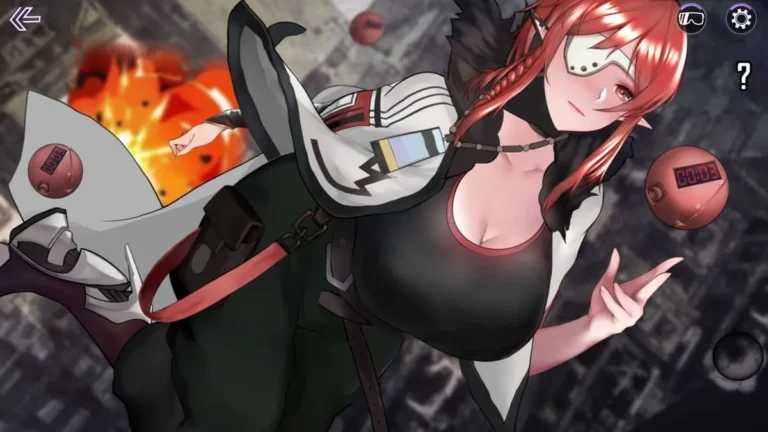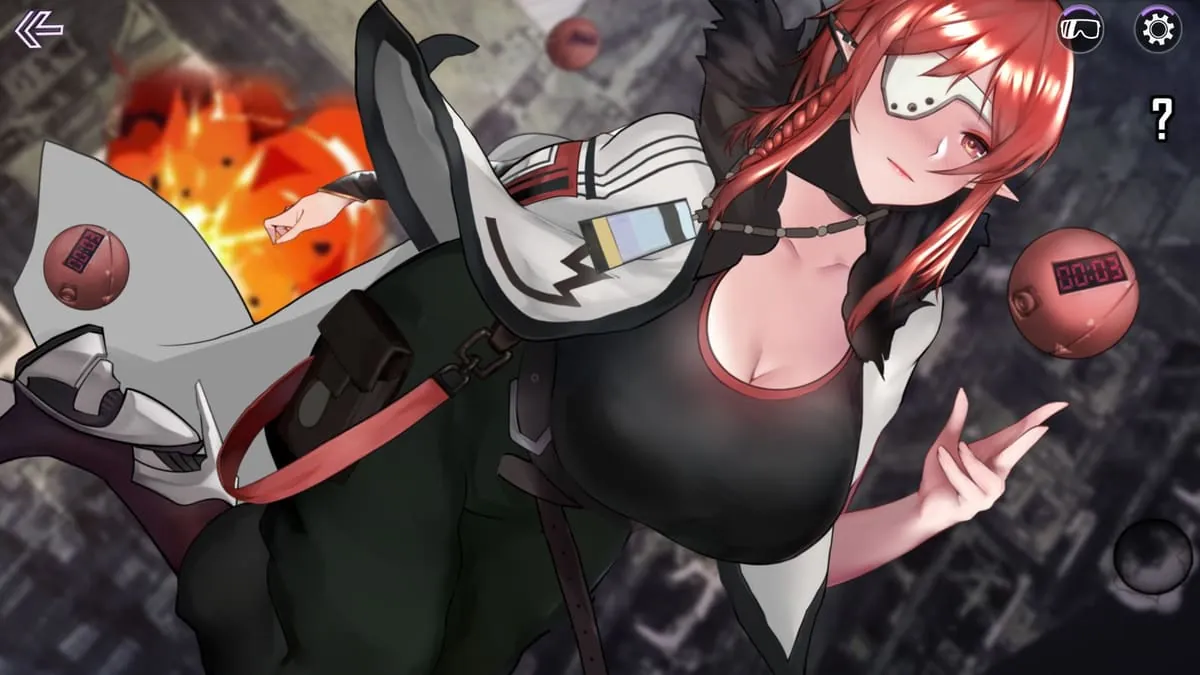
Infinite Jump Screenshots
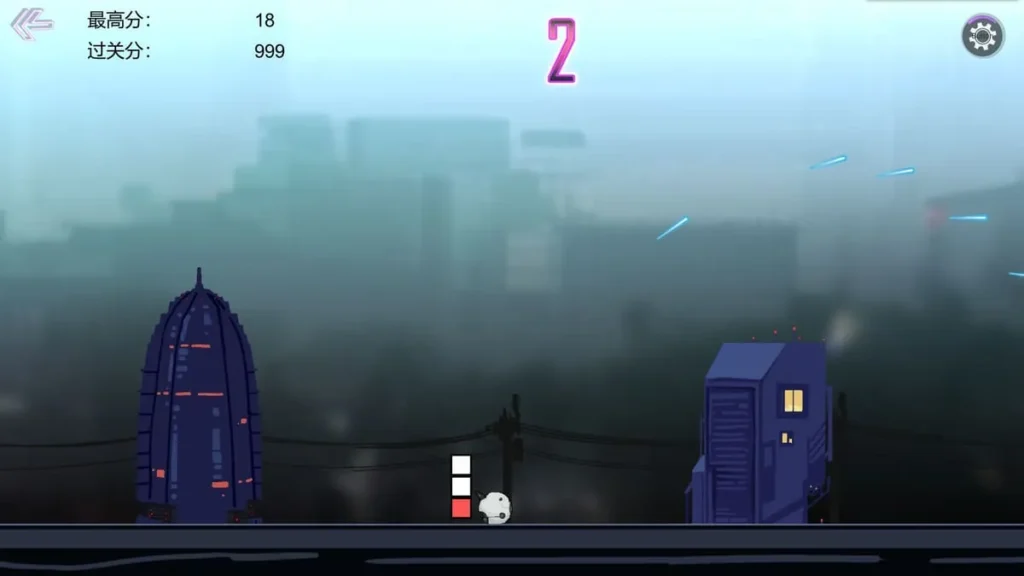


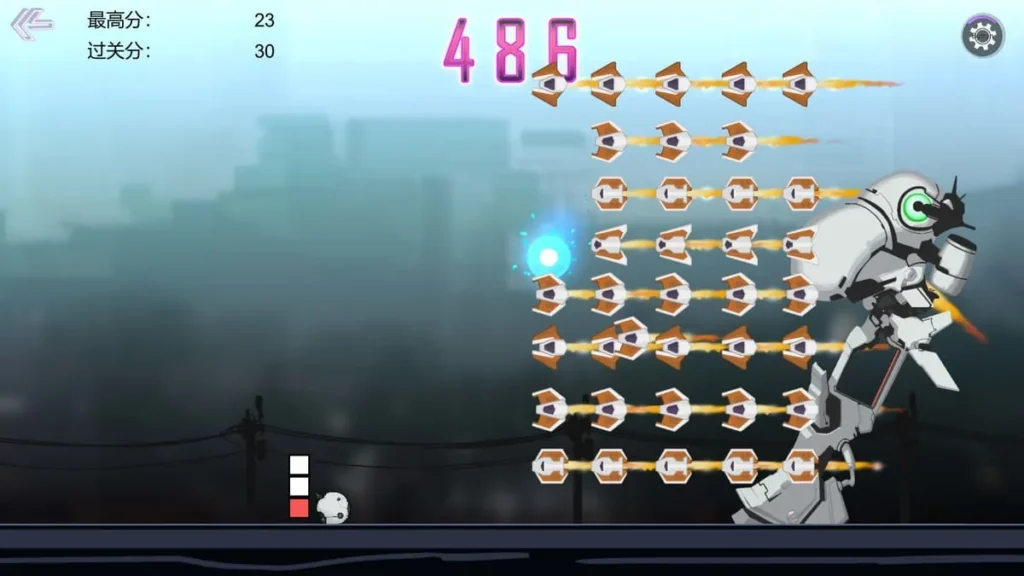

Infinite Jump review
Master Momentum Jumps and Combos in This Thrilling Game
Ever felt that rush of chaining perfect jumps in a platformer that just clicks? Infinite Jump hooked me from the first momentum-based leap, blending precise control with endless combo potential. This isn’t your basic hop-and-skip game—it’s a skill-testing adventure where every surface touch extends your aerial spree. Dive into Infinite Jump’s physics-driven world, uncover pro strategies for high scores, and customize your run like a pro. Whether you’re grinding for leaderboards or just chasing that flow state, this guide shares my top insights to elevate your play.
How Does Infinite Jump’s Core Mechanics Work?
I still remember the exact moment I got it. I was on the verge of a spectacular, gravity-assisted failure, plummeting towards a sea of spikes after mistiming a dash. My heart sank. But then, in a panic, I tapped the jump button just as I brushed against a vertical wall. My character didn’t just jump—they kicked off it, transforming my downward crash into a soaring, horizontal escape. The screen flashed, my combo multiplier ticked up, and I was suddenly flying across a gap I had no right to clear. That’s the magic of Infinite Jump gameplay. It’s not just about avoiding pits; it’s about using them, the walls, and every enemy as a springboard to impossible heights. This chapter is your deep dive into the core of that feeling. We’re cracking open Infinite Jump mechanics explained to understand the platformer physics that make you feel like a parkour god. 🚀
What Makes Momentum-Based Jumping So Addictive? 🎯
Forget everything you know about standard platformer jumps. In most games, you press a button and get a fixed, predictable arc. In Infinite Jump, you’re not just jumping; you’re conducting momentum. This is the soul of the game.
Think of your character as a pinball. The direction and speed you’re moving when you leap directly influence your jump. Running full-tilt to the right and jumping will launch you in a long, fast arc. But if you change direction mid-air with a gentle tap, you can curve that trajectory, weaving around obstacles. This momentum-based jumping creates an incredible sense of fluidity and control. It feels less like inputting commands and more like guiding a force of nature. You’re not fighting the physics; you’re learning to surf them.
This system is what makes Infinite Jump gameplay so uniquely rewarding. A perfect run feels less like a careful sequence of presses and more like a single, unbroken flow of motion. You stop thinking about “jump now” and start feeling “flow through here.” The mastery comes from understanding how your current velocity—whether from a previous jump, a dash, or even a fall—becomes the fuel for your next move.
The best momentum jumping tip I can give you is this: your left stick or directional keys aren’t just for direction; they’re for shaping your jumps in real-time. A slight hold in a different direction mid-flight is your secret weapon.
To build that instinct, here are some essential practices:
- Embrace the Fall: Don’t fear descending. A downward plunge gives you speed. Use that speed by jumping just before you hit a lower platform to convert it into massive horizontal distance.
- Wall-Kiss Bounces: Gently grazing a wall counts! Use this to make micro-adjustments to your angle without losing your combo, a vital skill for tight corridors.
- The Dash-Jump Synergy: A ground dash followed immediately by a jump creates your most powerful launch. Save this for clearing the widest gaps.
- Circle Strafe in the Air: Practice making small, circular motions with your control stick while airborne. This helps you feel how sensitive the directional influence is.
- Momentum Conservation: Once you’re moving fast in one direction, small adjustments are better than hard stops. Let your momentum carry you and guide it.
Unlocking the Jump Combo System Secrets 🔥
Okay, you’re surfing the momentum waves. But how do you turn that into a million-point run? Enter the glorious jump combo system. This is the game’s brilliant scoring and pacing engine, and understanding how Infinite Jump combos work is key to progression.
The rule is beautifully simple: land on anything other than the flat ground before touching it, and your combo continues. This includes:
* The tops of moving platforms
* The sides of walls (hello, wall jump!)
* The heads of enemies (a classic, but so satisfying)
* Even temporary platforms created by hitting certain switches or projectiles
Each successful “touch” increments your combo counter and a score multiplier. The higher it goes, the more the game rewards you with visual fireworks—screen shakes, particle effects, and a soundtrack that builds in intensity. It’s an incredible feedback loop. The system actively encourages the most daring, airborne playstyle possible. Why walk when you can bounce off three enemies and a spinning blade to reach your destination?
Mastering this system means changing your perception of the environment. Every enemy isn’t a threat; it’s a potential platform. A wall isn’t a barrier; it’s a launchpad. This shift in thinking is central to advanced Infinite Jump gameplay. I once escaped a boss’s arena-wide laser attack solely by chaining jumps between its own projectile orbs and the arena walls, never touching the deadly floor. It was a desperate, heart-pounding sequence of taps and adjustments that lasted about ten seconds but felt like an eternity. When I finally landed safely, my hands were shaking. That’s the power of the jump combo system—it turns survival into high art.
Progressive Challenges That Build Real Skill ⚔️
The game doesn’t just throw you into the deep end. It’s a masterclass in teaching through level design. The progressive challenges are engineered to force you to layer skills, constantly asking you to apply your understanding of momentum-based jumping and combos in new, demanding ways.
Early stages are open playgrounds, letting you experiment with basic chaining. But soon, the corridors narrow. You’ll encounter hazards that aren’t just static—they’re rhythmic, like spinning blades or expanding/contracting spikes, requiring you to time your momentum just right. Later, you’ll meet vanishing blocks that disappear a second after you touch them, demanding you plan your next jump point before you launch.
The real test comes when these elements combine. Imagine a narrow vertical shaft with disappearing blocks on either side and a spinning blade moving up the center. Your only path is a continuous, alternating wall bounce, with each kick-off timed to the blade’s rotation and the blocks’ reappearance. It’s here that the platformer physics truly sing. You’re not memorizing a pattern; you’re reacting in real-time to multiple moving parts, using your mastered feel for momentum to adapt.
Boss fights are the ultimate exam. They almost always take place in large, multi-tiered arenas and emphasize aerial mobility over grounded combat. You’ll need to use the boss’s own attacks—like projectile waves or temporary platforms they create—as parts of your jump combo system to stay airborne and reach their weak points. Standing still is a death sentence.
The progression can be broken down like this:
| Stage | Hazards | Key Skills Developed |
|---|---|---|
| Beginner (Open Arenas) | Static gaps, basic moving platforms, simple enemies. | Core **momentum-based jumping**, basic enemy/wall bounces, starting a combo chain. |
| Intermediate (Gauntlets) | Spinning blades, crumbling blocks, timed switches, denser enemy placement. | Precision timing, mid-air course correction, using hazards as combo tools, maintaining flow under pressure. |
| Advanced (Puzzle Chambers & Boss Fights) | Vanishing block sequences, environmental puzzles (e.g., using projectiles to create platforms), multi-phase boss patterns. | Route planning on the fly, advanced **how Infinite Jump combos work** with non-standard objects, mastering aerial boss patterns, sustaining ultra-long combos for max damage/score. |
🏁
The end goal of all this practice is to reach that sweet flow state. It’s when the music, the visual feedback, your thumbs on the controller, and your character’s motion all fuse into one. You stop thinking about the individual mechanics—the momentum-based jumping, the jump combo system—and start feeling the level. You see a path through the chaos not as a series of jumps, but as a single, fluid line you’re destined to trace.
My advice? Don’t just play to finish the levels. Play to style on them. Take risks. Try to bounce off that enemy instead of avoiding it. See if you can clear a room without ever touching the floor. That’s where the true, thrilling heart of Infinite Jump is found. It’s waiting for you in the air. ✨
Infinite Jump transforms simple platforming into an adrenaline-fueled mastery challenge with its momentum-based jumps and endless combos. From my countless runs dodging hazards and chaining wall bounces to customizing visuals that scream personal style, it’s a game that rewards dedication. Grab your controller, hit those practice arenas, and chase those perfect scores—your next high-score legend run awaits. Share your best combo in the comments and let’s swap tips!