Reconnect
Play Reconnect
Reconnect Screenshots




Reconnect review
Explore the choice-driven narrative experience that redefines interactive storytelling
Reconnect stands out as a narrative-driven experience that prioritizes player agency and emotional investment. Unlike traditional games that follow linear paths, this title places you at the center of a branching story where every dialogue choice, environmental interaction, and decision carries weight. Whether you’re drawn to choice-driven narratives or seeking a game that rewards exploration and replayability, understanding Reconnect’s core mechanics is essential. This guide breaks down what makes the experience unique, from its sophisticated dialogue system to its relationship tracking mechanics, helping you navigate the game’s emotional landscape and discover all it has to offer.
Understanding Reconnect’s Core Gameplay Mechanics
Ever feel like you’re just along for the ride in a story, watching someone else’s drama unfold? 🤔 You click the obvious “good guy” response, the plot chugs forward, and you never really feel the weight of your decisions. I’ve been there, and it’s why Reconnect hit me like a freight train. This isn’t just a game you play; it’s a story you build, word by word, click by click, and memory by memory. At its heart, Reconnect is a masterclass in interactive storytelling experience, transforming you from a spectator into the author.
The magic—and the gentle anxiety—comes from understanding that every single action, from what you say to what you examine, is quietly shaping your unique path. This choice-driven narrative game asks more of you than simple moral picks; it demands introspection, curiosity, and sometimes, a leap of faith. Let’s pull back the curtain on the systems that make this possible. 🎭
How Dialogue Trees Shape Your Story
Forget everything you think you know about how do dialogue trees work in games. In most titles, they’re glorified multiple-choice quizzes leading to a predefined ending. Reconnect dismantles that concept entirely. Here, Reconnect dialogue choices are less about picking a destination and more about defining who you are in the moment. The options presented to you aren’t labeled “Kind,” “Sarcastic,” or “Lie.” Instead, they reflect raw, human emotional states: Uncertainty. Defensiveness. Nostalgic longing. Biting sarcasm.
The game understands that real conversations are messy. When a character confronts you about a past mistake, you might not have a perfect, eloquent defense ready. Your options might be to evade the question, lash out in anger, or quietly admit you’re scared. None are “right,” but each sends a powerful signal about your character’s psyche and permanently alters how others perceive you. This is the core of its branching story mechanics—small, nuanced decisions that compound into vastly different narrative trajectories.
Let me give you a real example from my playthrough. Early on, an old friend, Leo, asks why you stopped returning his calls years ago. The dialogue tree offered:
* “I was going through a lot.” (Defensive)
* “I guess I just… drifted.” (Nostalgic/Uncertain)
* “Your constant drama was exhausting.” (Sarcastic/Hurtful)
I chose the sarcastic option, wanting to play a character who kept people at arm’s length. The immediate result was Leo’s expression closing off. But the real consequence came hours later. In a crucial, late-game scene where I needed his help, that earlier choice had reduced my affinity with him. A whole branch of the story—a path where he would have vouched for me—was now permanently locked off. Instead, I faced the confrontation alone. This single Reconnect dialogue choice didn’t just change a line of text; it reshaped the entire emotional climax of my story. That’s the power of a true choice-driven narrative game.
Pro Tip: There are no “redos” for major conversations. The game often employs timed decisions, forcing you to act on instinct. This eliminates save-scumming and makes your choices feel terrifyingly real and permanent. You learn to live with the consequences, just like in life.
The brilliance of these branching story mechanics is that they often hide their complexity. You feel like you’re just having a conversation, but beneath the surface, the game is tracking everything, preparing to pay off your choices in ways you can’t possibly anticipate on a first playthrough. It creates an irresistible pull to replay, just to see how a different version of “you” would fare.
Now, let’s visualize how all these core systems work together to create the complete interactive storytelling experience.
| Mechanic | Description | Player Impact |
|---|---|---|
| Dialogue Choices | Nuanced options based on emotional states (e.g., Defensive, Nostalgic) rather than simple morality. Timed decisions prevent overthinking. | Directly shapes character relationships, unlocks or locks story branches, and defines the protagonist’s personality. Your words have tangible, lasting weight. |
| Environmental Interaction | A point and click exploration system where clicking hotspots reveals memories, key objects, and environmental storytelling clues. | Provides vital backstory and context. Discovering memories can unlock new dialogue options and fundamentally change your understanding of past events. |
| Relationship System | An invisible affinity metric that tracks your standing with every character based on all your interactions, both verbal and environmental. | Determines which story paths are available, who supports you in crises, and ultimately, which ending you achieve. It’s the silent scorekeeper of your journey. |
| Branching Narrative | The cumulative result of all choices, creating a story path that diverges significantly from other players’ experiences. | Creates high replayability and a profound sense of ownership over the narrative. Your story is literally unique, built by your cumulative decisions. |
Environmental Exploration and Memory Discovery
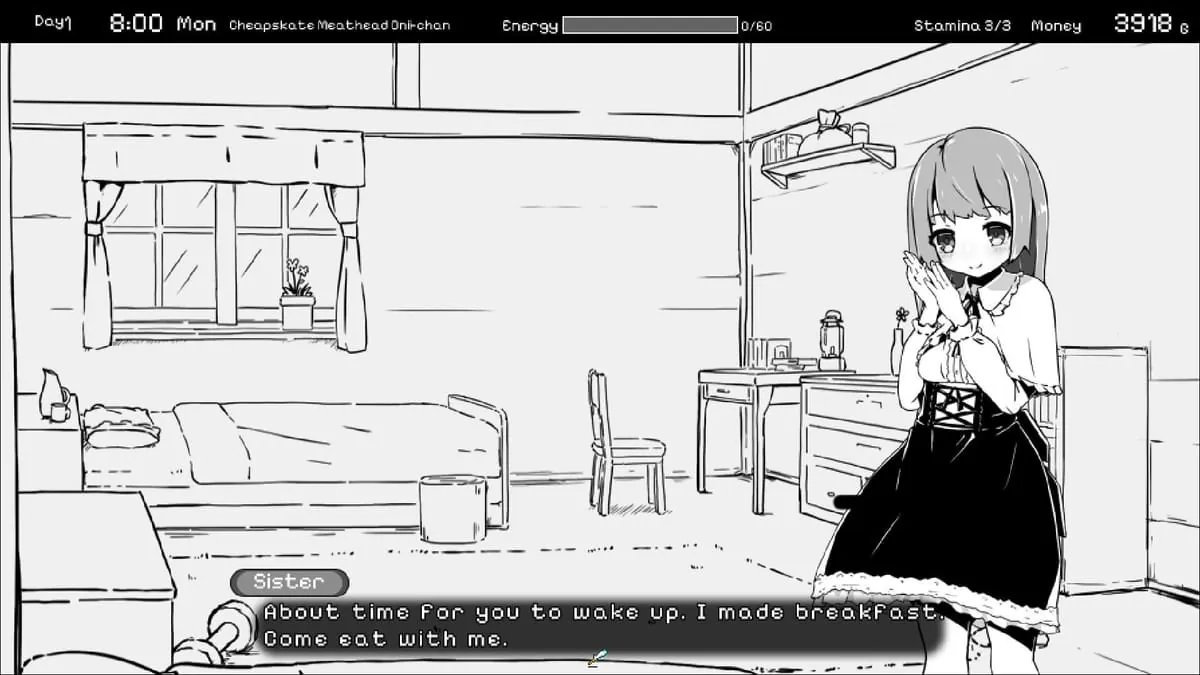
If conversations are the heart of Reconnect, then the environments are its soul and memory bank. 🧠 This isn’t a game of empty rooms you sprint through; every space is a treasure trove of meaning, accessed through its elegant point and click exploration. You’ll navigate familiar, emotionally charged locations—a childhood home, a dusty old workshop, a quiet lakeside pier. Your cursor becomes a detective’s tool, highlighting objects you can interact with.
But you’re not just picking up inventory items. When you click on a faded photograph, you don’t just get a description; you relive the moment it was taken. A brief, poignant memory plays out, filling in gaps of the story that dialogue alone can’t reach. Examining an old, half-finished model airplane on a shelf might trigger a flashback of you and your father, revealing the root of a current conflict. This mechanic seamlessly blends present exploration with past revelation.
This point and click exploration is never just busywork. Every discovered memory and examined object directly feeds back into the narrative ecosystem. That memory of your father? It might unlock a new, more vulnerable dialogue option when speaking to your sibling about him later. Finding a hidden letter can completely recontextualize a character’s motives, making you second-guess every prior interaction. The environment is a silent narrator, and by engaging with it, you become an active archaeologist of your own past. This deep integration is what elevates the game beyond a simple visual novel into a rich interactive storytelling experience.
I remember cautiously exploring the protagonist’s old bedroom. Clicking on a specific song poster didn’t just say “A poster for a band.” It triggered a visceral memory of a teenage rebellion, a slammed door, and a harshly spoken word that was never taken back. That five-second flashback did more to explain the strained relationship with the protagonist’s mother than three subsequent conversations could. It was a punch to the gut I had actively unearthed myself. That’s the power of discovery in Reconnect—the story isn’t told to you; you excavate it. 🔍
The Relationship System and Its Impact on Endings
Beneath the beautiful, melancholic surface of Reconnect runs a cold, precise calculus: the relationship system video game mechanics done right. You never see a heart meter or a percentage bar above a character’s head, and thank goodness for that. Instead, the game maintains an invisible ledger, a complex affinity score for every person in your life that fluctuates with every single interaction.
This relationship system video game approach is deceptively simple in concept but profound in effect. Every Reconnect dialogue choice you make—whether kind, harsh, evasive, or truthful—adjusts your standing. But it goes deeper: Ignoring a character’s plea for help during point and click exploration, or failing to discover a memory that’s important to them, can also ding your affinity. The system understands that in relationships, silence and inaction are also powerful statements.
The impact isn’t always immediate. You might think you got away with a snarky comment, only to find that character subtly less willing to open up to you several chapters later. Doors you didn’t even know existed begin to close. Conversely, small, consistent acts of empathy—choosing a nostalgic dialogue option, finding and returning a lost memento—build bridges that will bear weight when the story’s storms hit. 🏗️
This all converges on the game’s endings. Reconnect doesn’t have one “true” ending followed by a handful of minor variations. It has a spectrum of conclusions that are direct, logical outcomes of the relationships you’ve nurtured or neglected. Your ending isn’t determined by one final choice, but by the sum total of your entire journey.
Will you face the finale surrounded by mended bonds and hard-won understanding? Or will you stand alone, having pushed everyone away with your defensiveness or sarcasm? Perhaps you’ll have a bittersweet mix, having reconnected with one person but lost another forever. The relationship system video game logic ensures that your ending feels earned, a direct reflection of the person you chose to be throughout this choice-driven narrative game. It transforms the finale from something you watch into something you confront, for better or worse.
In my first playthrough, my obsession with independence and my sarcastic Reconnect dialogue choices led to a solitary, melancholic ending. It was heartbreaking, but it felt utterly true to the character I’d crafted. On my second run, focusing on vulnerability and diligent exploration to uncover memories, I achieved a profoundly different, hopeful conclusion. The branching story mechanics and the invisible relationship system made both journeys feel uniquely and powerfully mine.
Ultimately, Reconnect is more than the sum of its parts. It’s a carefully crafted ecosystem where dialogue, exploration, and relationships are inseparably linked. Your choices in conversation define your character, your curiosity in the environment reveals your history, and together, they dictate your connections and your destiny. This seamless fusion is what makes it a landmark interactive storytelling experience. It doesn’t just tell you a story about reconnecting; it makes you feel the fragile, beautiful weight of every single connection you choose to make—or break—along the way.
Reconnect delivers a compelling experience centered on meaningful player choice and emotional authenticity. The game’s sophisticated dialogue system, environmental exploration mechanics, and invisible relationship tracking create a world where your decisions genuinely matter. By understanding how these core systems interconnect—from nuanced dialogue options to timed decisions that test your instincts—you’ll appreciate the depth of storytelling the game offers. The branching narrative structure ensures that no two playthroughs feel identical, rewarding exploration and encouraging you to discover alternative paths and endings. Whether you’re experiencing Reconnect for the first time or planning a second playthrough to explore different choices, these mechanics form the foundation of an experience designed to make you feel invested in every decision you make.